
The architecture of the baroque period stands as one of the most dramatic and emotionally charged artistic movements in Western history, born in Rome around 1600 and rapidly reshaping the built environment across entire continents. Characterized by grandeur, theatrical ornamentation, and a deliberate appeal to the senses, baroque buildings were designed not merely to shelter but to overwhelm, persuade, and inspire devotion.
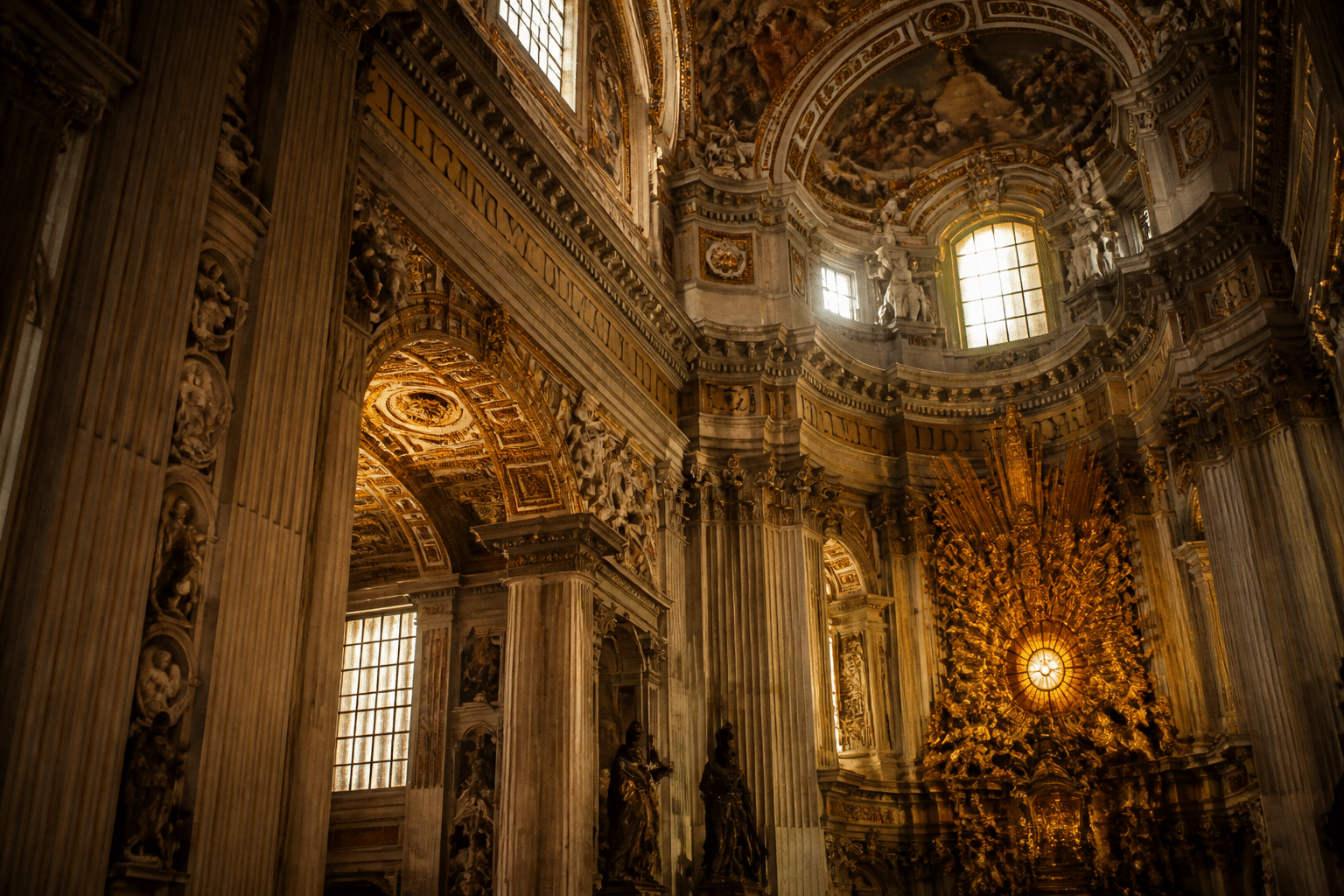
Understanding this architectural style matters because it shaped capitals, pilgrimage routes, and royal courts from Lisbon to Warsaw, from Mexico City to Vienna. The political and religious upheavals of the 17th century, including the Catholic Counter-Reformation and the rise of absolutist monarchies, created an extraordinary demand for buildings that could project power and spiritual authority with maximum visual impact. Few movements in art history have responded so directly to ideological pressure.
This article examines the origins, defining characteristics, regional variations, key figures, and lasting legacy of baroque architecture, providing concrete examples and practical observations to help any reader recognize and appreciate this magnificent style in the field.
Pas le temps de lire l’article ?
- Baroque architecture emerged in 16th-century Italy and spread across Europe with dramatic, ornate designs
- Key features include curved forms, elaborate decorations, bold colors, and theatrical lighting effects
- Religious institutions dominated baroque construction with churches showcasing grandeur and spiritual magnificence
- Famous baroque landmarks like St. Peter’s Basilica and Palace of Versailles remain iconic examples worldwide
Definition and Origins of Baroque Architecture
Historical Context
Baroque architecture emerged in Rome during the late 16th century as a direct response to the Protestant Reformation. The Catholic Church, shaken by the theological challenges of Luther and Calvin, sought a new visual language through the Council of Trent (1545–1563), commissioning buildings and artworks that would reaffirm its authority and reawaken popular faith. Where Renaissance architecture spoke in calm, rational proportions, the new baroque style spoke in emotion, movement, and overwhelming sensory richness.
The word « baroque » itself is thought to derive from the Portuguese barroco, meaning an irregularly shaped pearl. Early critics used it disparagingly to describe what they saw as exaggerated, unruly design. Over time, however, the term shed its pejorative edge and came to define one of the most significant and recognizable architectural traditions in world history, spanning roughly from 1600 to the early 18th century.
Geographic Spread
From its Italian cradle, the baroque style spread with remarkable speed across Catholic Europe. Spain and Portugal adopted it enthusiastically, carrying it further to their colonial territories in Latin America, where it blossomed into extravagant local variants. France absorbed baroque influences while tempering them with classical discipline under Louis XIV, whose court at Versailles became a model of monarchical grandeur. Central Europe, particularly Austria and the German-speaking states, produced some of the most elaborate baroque churches ever built, while Poland, the Czech lands, and Croatia developed their own distinctive interpretations.
Even Protestant England engaged with baroque principles, most visibly in the work of Christopher Wren after the Great Fire of London in 1666. The movement’s geographic breadth explains both its richness and its diversity: baroque is not a single uniform style but a family of related approaches united by shared values of drama, dynamism, and ornamental abundance.
Distinctive Characteristics of Baroque Architecture
Ornamental Elements
The most immediately recognizable feature of baroque buildings is their extraordinary decorative density. Facades and interiors alike are laden with scrolls, garlands, acanthus leaves, putti (cherubs), shells, cartouches, and figurative sculpture. Nothing is left plain where ornament can be applied. This decorative language was not merely aesthetic; each motif carried symbolic meaning intended to communicate theological or political messages to largely illiterate audiences.
Twisted or solomonic columns, spiraling upward like corkscrews, appear frequently in baroque altarpieces and baldachins. Atlantes and caryatides, muscular or draped figures used as architectural supports, replaced simple pilasters on many facades. Broken pediments, where the triangular or curved top of a doorframe or window is split open and filled with a decorative element, became a signature baroque motif signaling dynamism and the rejection of classical rigidity.
Structural Features
Beyond surface decoration, baroque architects made fundamental changes to spatial organization. Curved walls, undulating facades, and elliptical floor plans replaced the straight lines and circular geometry of the Renaissance. Buildings seem to breathe and shift as the viewer moves around them, creating a sense of continuous movement rather than static repose. Domes were enlarged and made more prominent, often raised on tall drums to maximize their visual impact on the urban skyline.
Architects like Francesco Borromini pushed spatial complexity to its limits in churches such as San Carlo alle Quattro Fontane in Rome, where the entire building fits within one of the piers of St. Peter’s Basilica yet feels spatially generous through clever manipulation of curves and light. Axial planning extended outdoors, with buildings placed at the end of long processional routes or boulevards to maximize theatrical arrival.
Color and Materials
Baroque interiors embraced bold, warm color palettes: deep reds, rich golds, creamy whites, and vivid blues dominated church naves and palace salons. Marble, imported from quarries across Italy, Spain, and beyond, provided prestige and chromatic variety. Stucco, a plaster compound, allowed craftsmen to create elaborate three-dimensional decorations on ceilings and walls at lower cost than carved stone, enabling the style to spread even to regions with limited access to high-quality building materials.
Gilding, applied to columns, frames, and sculptural details, caught candlelight and created an atmosphere of otherworldly luminosity in religious spaces. Just as interior design choices can shape mood and well-being, baroque designers understood that the deliberate orchestration of color, material, and light could profoundly influence the emotional state of anyone entering their buildings.
Major Baroque Architectural Elements
Columns and Capitals
Classical column orders were not abandoned in the baroque period but transformed. Composite capitals, combining Ionic volutes with Corinthian acanthus leaves, appeared widely. Giant orders, where columns or pilasters span two or more stories of a facade, became a preferred device for asserting monumental scale. The solomonic column, its shaft twisted in a continuous spiral, derives its name from the legendary Temple of Solomon and carries connotations of sacred antiquity; Gian Lorenzo Bernini made it the defining element of his great baldachin over the tomb of Saint Peter in Vatican City.
Facades
The facade of a baroque building functions as a theatrical stage set, creating deep shadows through projecting and receding elements, niches filled with sculpture, and layered planes of masonry. Carlo Maderno’s facade for St. Peter’s Basilica, completed in 1612, established a template that influenced church design across Europe for over a century. Curved facades, pioneered by Borromini and his contemporaries, gave buildings a plastic, almost sculptural character as though the wall itself were alive and in motion.
Interior Design
Baroque interiors frequently deployed trompe-l’oeil ceiling paintings, illusionistic compositions that make flat or shallow surfaces appear to open into vast heavenly spaces populated by saints, angels, and divine light. Andrea Pozzo’s ceiling at Sant’Ignazio di Loyola in Rome (completed around 1694) is among the most celebrated examples, extending the physical architecture of the nave into an apparently limitless painted sky. This fusion of painting, sculpture, and architecture into a single unified experience was a defining baroque ambition, aimed at dissolving the boundary between the earthly and the divine.
Famous Examples of Baroque Architecture
Italian Baroque
Italy remains the spiritual homeland of the baroque style, and Rome its epicenter. St. Peter’s Basilica, completed under Maderno and enhanced by Bernini’s sweeping colonnade (begun 1656), represents the movement’s most ambitious realization. The Trevi Fountain, designed by Nicola Salvi and completed in 1762, exemplifies the baroque integration of architecture, sculpture, and water into a unified urban spectacle. The Palazzo Barberini and the churches of Santa Maria della Vittoria and Sant’Andrea al Quirinale further illustrate the range and quality of Roman baroque achievement.
French Baroque
French baroque, sometimes called the Louis XIV style, adapted Italian exuberance to the demands of royal absolutism. The Palace of Versailles, expanded by Jules Hardouin-Mansart from 1678 onward, combined baroque scale and ornamental richness with French classical order and geometric garden design. The Hall of Mirrors, with its seventeen arched windows reflected in seventeen mirrored arcades, remains one of the most spectacular interiors ever created. François Mansart’s earlier work established the conventions of French baroque domestic architecture, influencing the design of aristocratic hotels particuliers across the country.
The architecture of the baroque period in France also found expression in urban planning: the Place Vendôme and the Place des Victoires in Paris, both designed by Hardouin-Mansart, demonstrate how baroque principles of grandeur and axiality could organize entire city districts around the glorification of the monarch. Much like exploring the world’s most celebrated monuments, visiting Versailles today still delivers an immediate sense of scale that photographs cannot fully convey.
Spanish and Germanic Variants
Spanish baroque reached its most extreme expression in the Churrigueresque style, named after José Benito de Churriguera, characterized by almost obsessive surface decoration covering facades and altarpieces with dense layers of carved ornament. The facade of the Cathedral of Santiago de Compostela, redesigned by Fernando de Casas Novoa between 1738 and 1750, exemplifies this exuberant approach. In colonial Latin America, local craftsmen blended Spanish baroque with indigenous decorative traditions, producing hybrid masterpieces in cities such as Oaxaca, Quito, and Potosí.
In the German-speaking world and Austria, baroque architecture achieved extraordinary grandeur in the early 18th century. Johann Bernhard Fischer von Erlach’s Karlskirche in Vienna (begun 1716) combines a classical portico with two flanking solomonic columns and a high oval dome, creating a composition of remarkable originality. Balthasar Neumann’s Basilica of Vierzehnheiligen in Bavaria and his Residenz staircase at Würzburg demonstrate a mastery of spatial drama that remains unsurpassed.
Religious Influence on Baroque Design
Church Architecture
The Catholic Church was the dominant patron of baroque architecture throughout the 17th century. New religious orders, particularly the Jesuits, commissioned churches across Europe and the Americas as instruments of evangelization. The Gesù in Rome, the mother church of the Society of Jesus completed in 1584, established a model widely imitated: a wide, single nave without side aisles to maximize visibility of the altar and preacher, flanked by lateral chapels, and covered by a coffered barrel vault leading to a luminous crossing dome.
Spiritual Expression
Baroque church design was consciously engineered to produce specific emotional and spiritual states. Dramatic contrasts of light and shadow, achieved through strategically placed windows, hidden light sources, and gilded surfaces, were intended to evoke the experience of divine radiance breaking into a dark world. Sculptural programs depicting the sufferings of martyrs and the ecstasies of saints engaged viewers viscerally, making abstract theological concepts tangible and emotionally compelling in ways that plain preaching could not.
Papal Patronage
Successive popes played an active role in shaping the baroque cityscape of Rome. Urban VIII (Maffeo Barberini), who reigned from 1623 to 1644, was Bernini’s great patron and commissioned the baldachin of St. Peter’s, the Palazzo Barberini, and major urban fountains. Alexander VII (Fabio Chigi), pope from 1655 to 1667, commissioned Bernini’s colonnade for St. Peter’s Square, transforming the approach to the basilica into a monumental embrace symbolizing the Church’s welcome to all humanity. This active patronage gave Rome its baroque identity and made it the model that other Catholic capitals sought to emulate.
Baroque Architecture vs Other Periods
Comparison with Renaissance
| Feature | Renaissance | Baroque |
|---|---|---|
| Geometric preference | Circle, square, symmetry | Oval, spiral, dynamic asymmetry |
| Decorative approach | Restrained, proportional | Exuberant, layered, theatrical |
| Spatial effect | Clear, harmonious, readable | Complex, surprising, immersive |
| Light treatment | Even, rational illumination | Dramatic chiaroscuro contrasts |
| Primary models | Ancient Rome, Vitruvius | Mannered classicism, emotional rhetoric |
| Representative building | Tempietto, Bramante (1502) | St. Peter’s colonnade, Bernini (1656) |
Just as ancient Greek temples expressed rationalist ideals through pure geometric forms, Renaissance architects sought mathematical harmony as a reflection of divine order. Baroque architects did not reject this foundation but deliberately complicated and dramatized it, treating classical rules as a vocabulary to be bent rather than a law to be obeyed.
Transition to Rococo
By the early 18th century, baroque’s monumental gravity began giving way to the lighter, more intimate Rococo style. Rococo retained the curved forms and ornamental density of the baroque but replaced its dramatic grandeur with pastel colors, delicate scrollwork, and a playful, secular character suited to aristocratic salons rather than royal chapels. The German and Austrian Rococo, visible in the interiors of the Amalienburg hunting lodge near Munich, represents the most refined expression of this evolutionary next step.
Classical Differences
Neo-classicism, which arose in reaction to both baroque and Rococo excess from the mid-18th century onward, deliberately returned to the restraint and rationality of ancient Greek and Roman models. Where baroque celebrated abundance, neo-classicism prized economy of means. Where baroque treated the wall as a surface to be animated, neo-classicism favored clean, planar surfaces punctuated by correctly ordered columns and minimal ornament.
Materials and Construction Techniques
Marble and Stone
Marble was the prestige material of baroque architecture, its varied colors and capacity for high polish making it ideal for creating the rich, luminous interiors the style demanded. Roman baroque churches sourced marble from ancient sites across Italy as well as from active quarries in Carrara, Sicily, and, for the most ambitious projects, from further afield. The sheer weight of marble required robust structural systems and deep foundations, making baroque construction an engineering challenge as well as an artistic one.
Stucco Work
Skilled stucco artisans, many of them from the Italian-speaking regions of what is now Switzerland (the Ticino and surrounding areas), spread across Europe carrying their techniques with them. Stucco allowed craftsmen to model three-dimensional figures, foliage, and architectural ornament directly onto surfaces at a fraction of the cost of carved stone, enabling the elaborate decorative programs of German and Austrian baroque churches even in relatively modest budgets. The best stucco work achieved a quality of crisp, ivory-white modeling that rivals carved marble in visual impact.
Sculptural Integration
One of the defining ambitions of baroque architecture was the seamless integration of sculpture and building, so that neither could be fully understood without the other. Gian Lorenzo Bernini was the supreme master of this synthesis: his Ecstasy of Saint Teresa in Santa Maria della Vittoria in Rome places a fully three-dimensional sculptural tableau within an architectural frame that includes painted figures looking down from marble balconies, collapsing the distinction between painting, sculpture, and architecture into a single unified theatrical experience.
Legacy and Modern Influence of Baroque Architecture
Preservation Efforts
The major monuments of baroque architecture are today among the world’s most visited and carefully protected heritage sites. UNESCO has inscribed dozens of baroque ensembles on its World Heritage List, including the historic center of Rome, the Palace of Versailles, the Old Town of Salzburg, and the colonial baroque centers of Oaxaca and Olinda in Latin America. Preservation presents ongoing challenges: the porous limestone and stucco used in many baroque structures require regular conservation, and the sheer number of visitors to famous sites creates wear that must be carefully managed.
Contemporary Appreciation
Modern architects continue to study baroque principles for insights into how buildings can produce emotional responses in their users. The manipulation of light, the use of curved forms to create spatial dynamism, and the integration of art and architecture all remain relevant concerns for designers working today. Postmodern architects of the late 20th century, including Robert Venturi and Philip Johnson, explicitly drew on baroque traditions of surface decoration and historical reference as alternatives to modernist austerity.
Global Impact
The architecture of the baroque period left physical traces on every inhabited continent. From the silver-encrusted altarpieces of Andean churches to the gilded royal chapels of Portugal, from the Jesuit missions of Paraguay to the cathedral facades of the Philippines, baroque design carried European aesthetic values into encounter with local traditions and materials, producing a global family of hybrid architectural forms. Heritage tourism built around baroque monuments generates substantial economic activity in cities such as Rome, Vienna, Prague, and Salamanca, confirming that the movement’s capacity to captivate audiences has not diminished after four centuries.
The study of baroque architecture ultimately reveals how deeply buildings are shaped by the societies that create them, and how powerfully they can shape those societies in return. Whether encountered in a Roman piazza, a Bavarian pilgrimage church, or a Mexican colonial cathedral, the baroque style continues to demand an emotional response that few other architectural traditions can match. If these pages have sparked your curiosity, consider planning a journey to one of Europe’s baroque capitals: Rome, Vienna, or Prague each offer concentrated encounters with this extraordinary tradition that no photograph or description can fully prepare you for.
Questions fréquentes
What is the main characteristic of architecture of the Baroque period?
The main characteristic is ornate, dramatic design featuring curved forms, elaborate decorations, bold colors, and theatrical elements that create emotional impact and visual movement.
When did the Baroque architectural period begin?
Baroque architecture began in late 16th-century Italy during the Counter-Reformation and gradually spread throughout Europe over the following centuries.
Why was Baroque architecture so ornate?
The ornate style served religious and political purposes, aiming to inspire awe, demonstrate wealth and authority, and create emotionally powerful spiritual experiences.
What are common materials in Baroque architecture?
Common materials include marble, stucco, gilded surfaces, and decorative stones combined with integrated sculptures for maximum visual impact.
How does Baroque architecture differ from Renaissance?
Renaissance emphasized proportion and symmetry while Baroque embraced drama, movement, and emotional expression through curved forms and elaborate ornamentation.
What countries developed the most distinctive Baroque architecture?
Italy, France, Spain, Austria, and Germany each developed distinctive baroque styles, with Italy pioneering the movement and France creating elegant royal interpretations.
4 commentaires sur « Architecture of the Baroque Period: Characteristics, Style and Historical Impact »